COURAGE TO KNOW in post Orbán Hungary and a famous squat in the heart of Rome
The 2026 touring season of Divadlo Líšeň began in spectacular fashion — with a journey of several thousand kilometres, first to Szombathely in Hungary and then straight on to Rome. As part of the Courage to Know project, focused on current social and political issues, we organised six events — three performances and three discussions led by our international partners, in this case the Hungarian puppet theatre Mesebolt Bábszínház and the Italian social integration organisation Programma Integra.
We have visited Hungary repeatedly in recent years, and our socially engaged productions have always resonated strongly there. Unfortunately, this is also because the genre faces little competition as a result of the long-term suppression of independent culture. This time, however, we were looking forward to a new Hungary, freed from sixteen years of Orbán’s rule. That period represented profound destruction for democracy and civil society. We spoke openly about this several times during the post-show discussions as well.
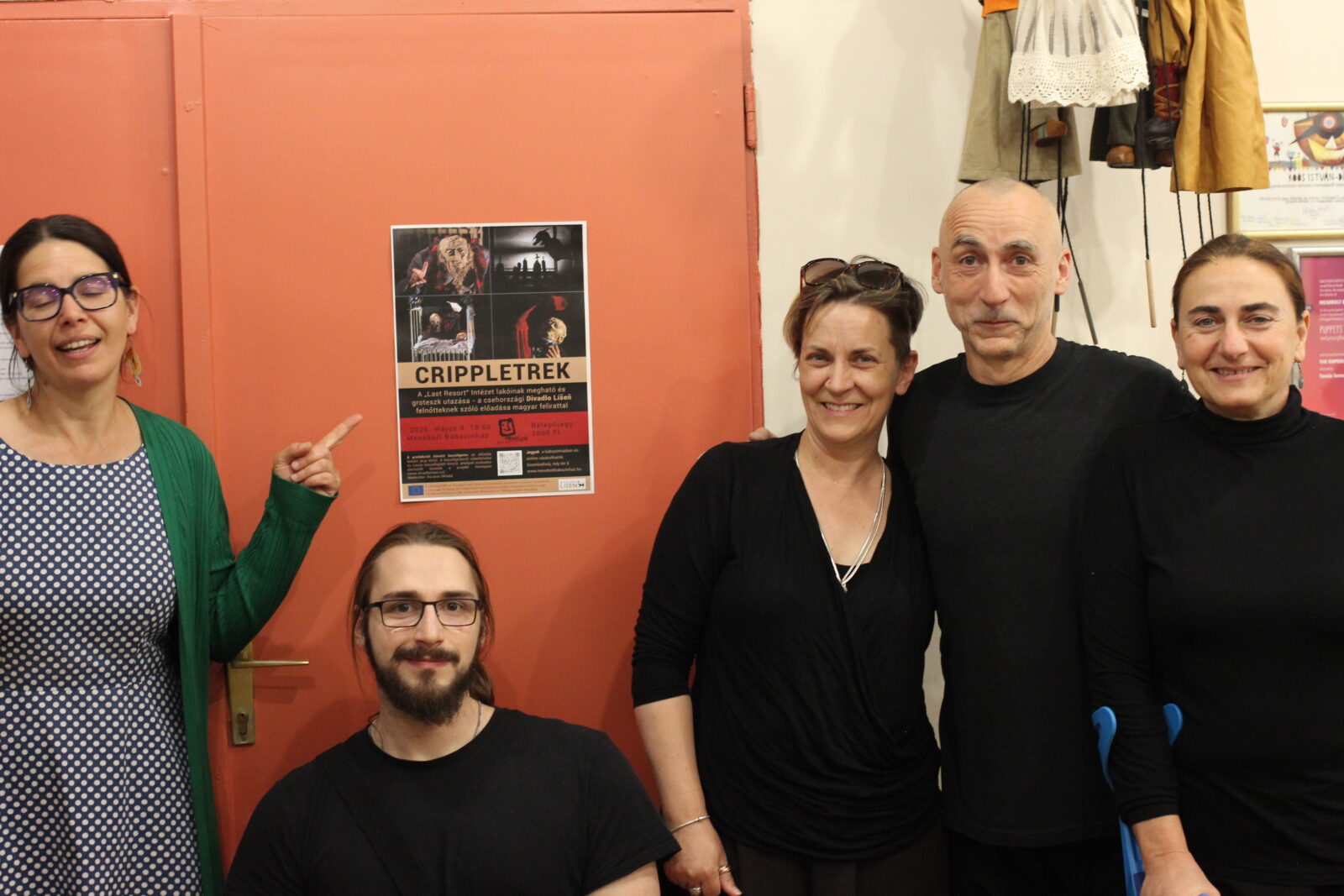
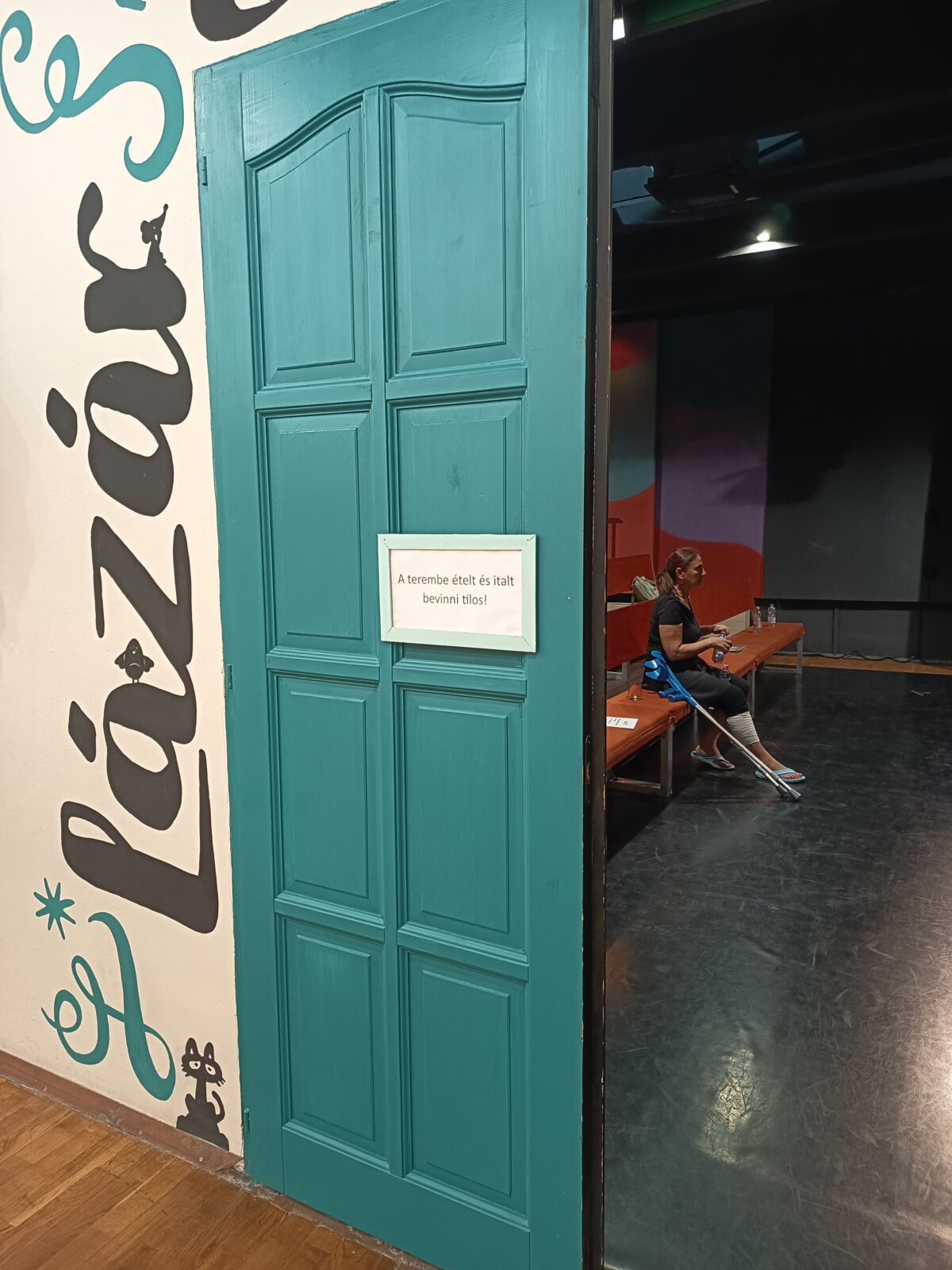
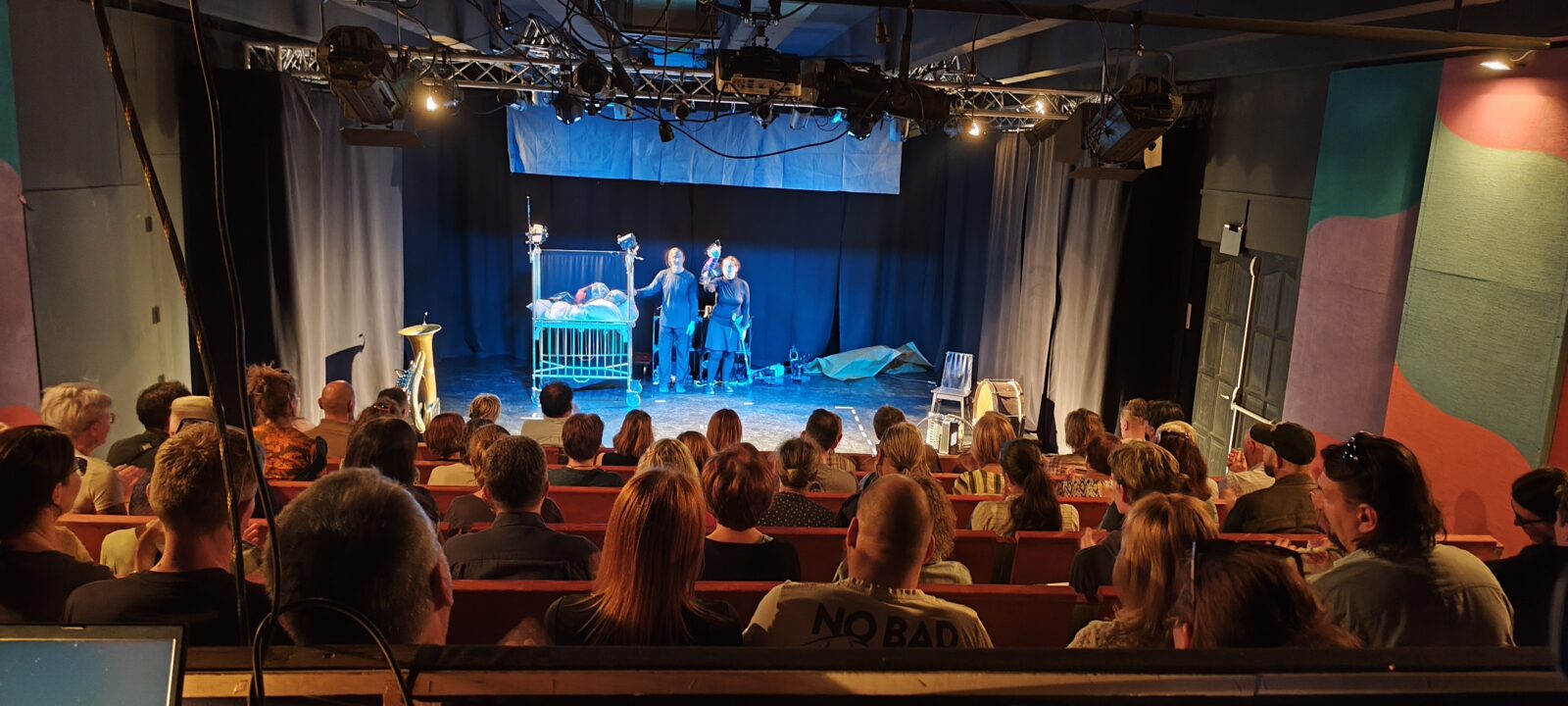
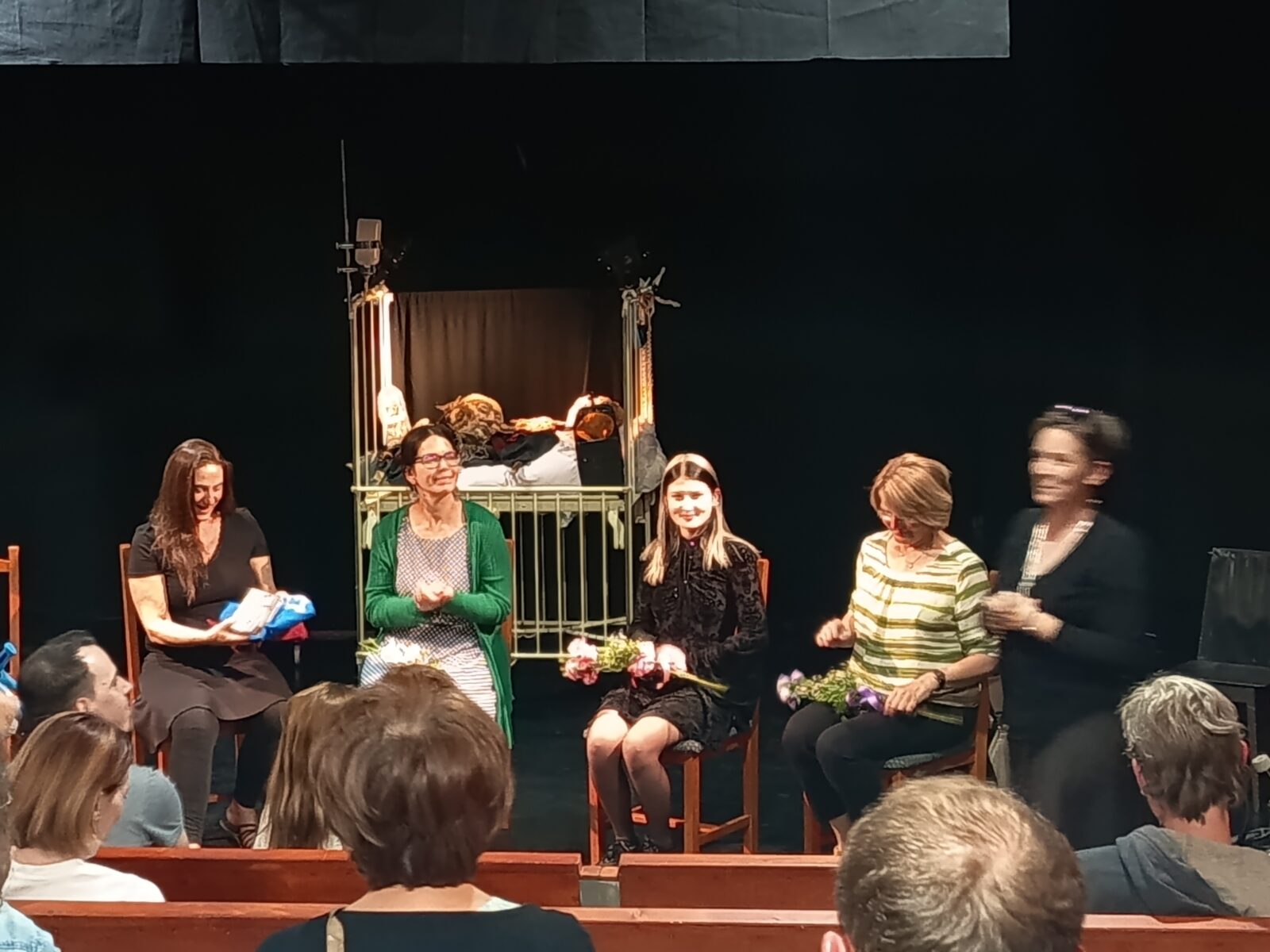
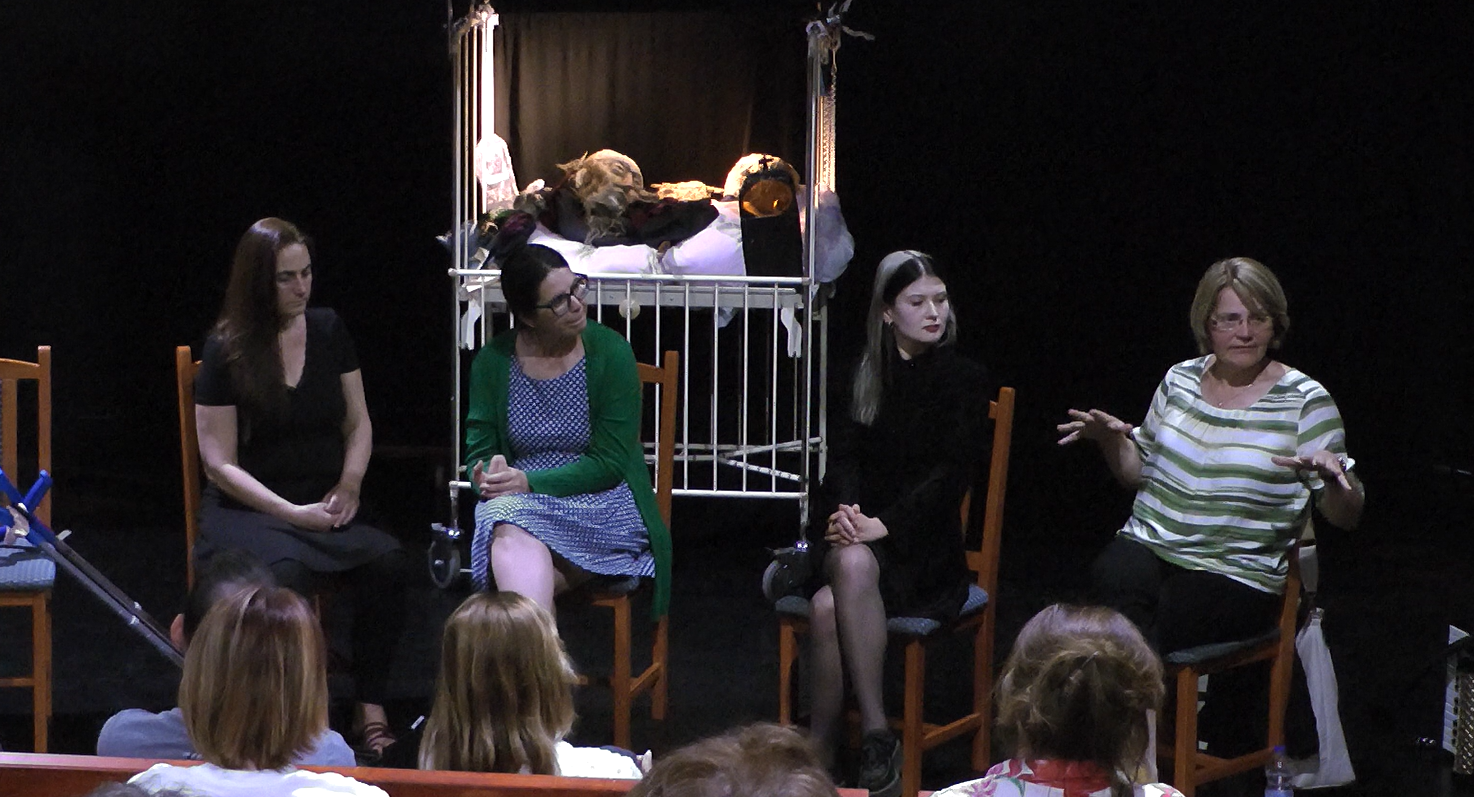
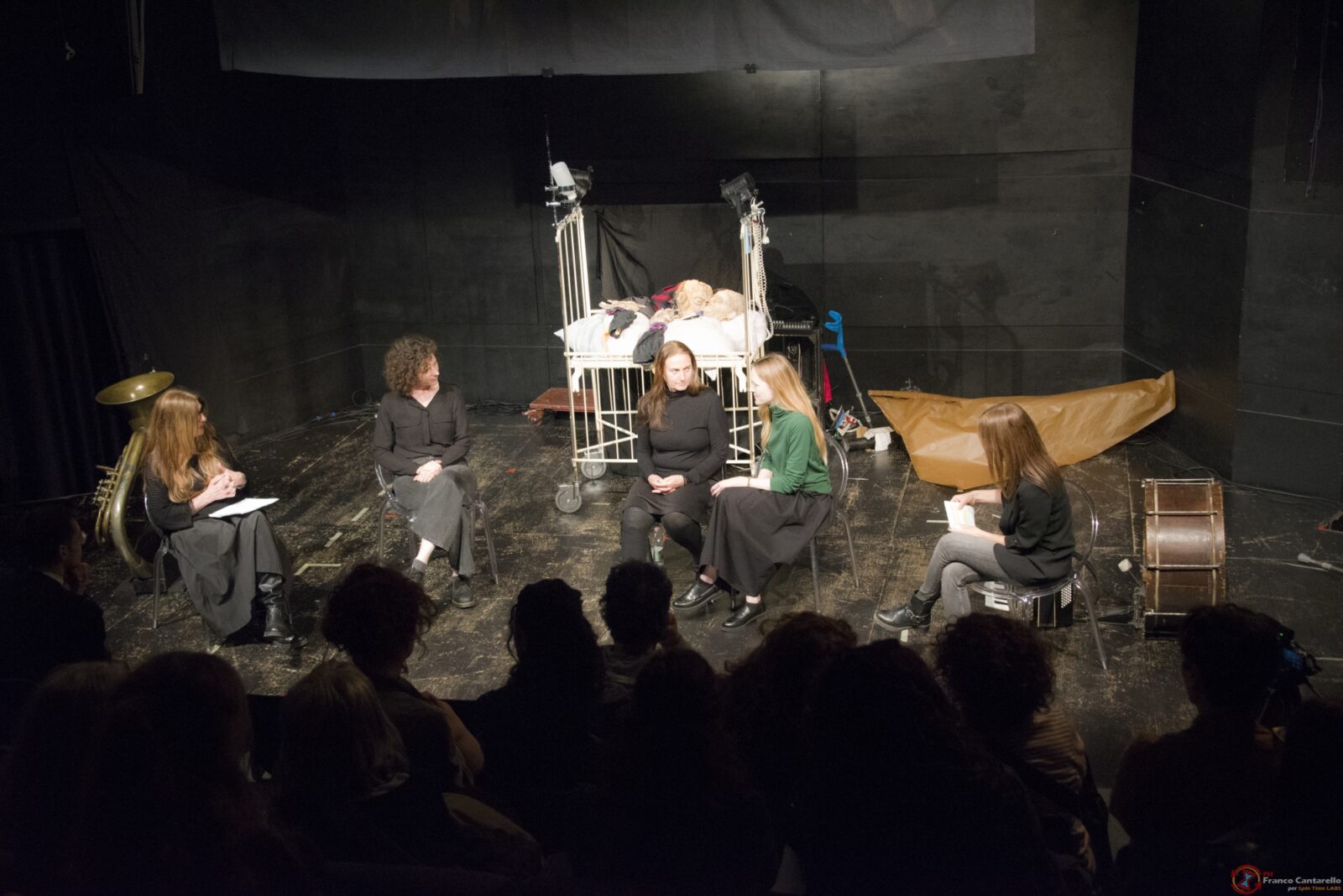
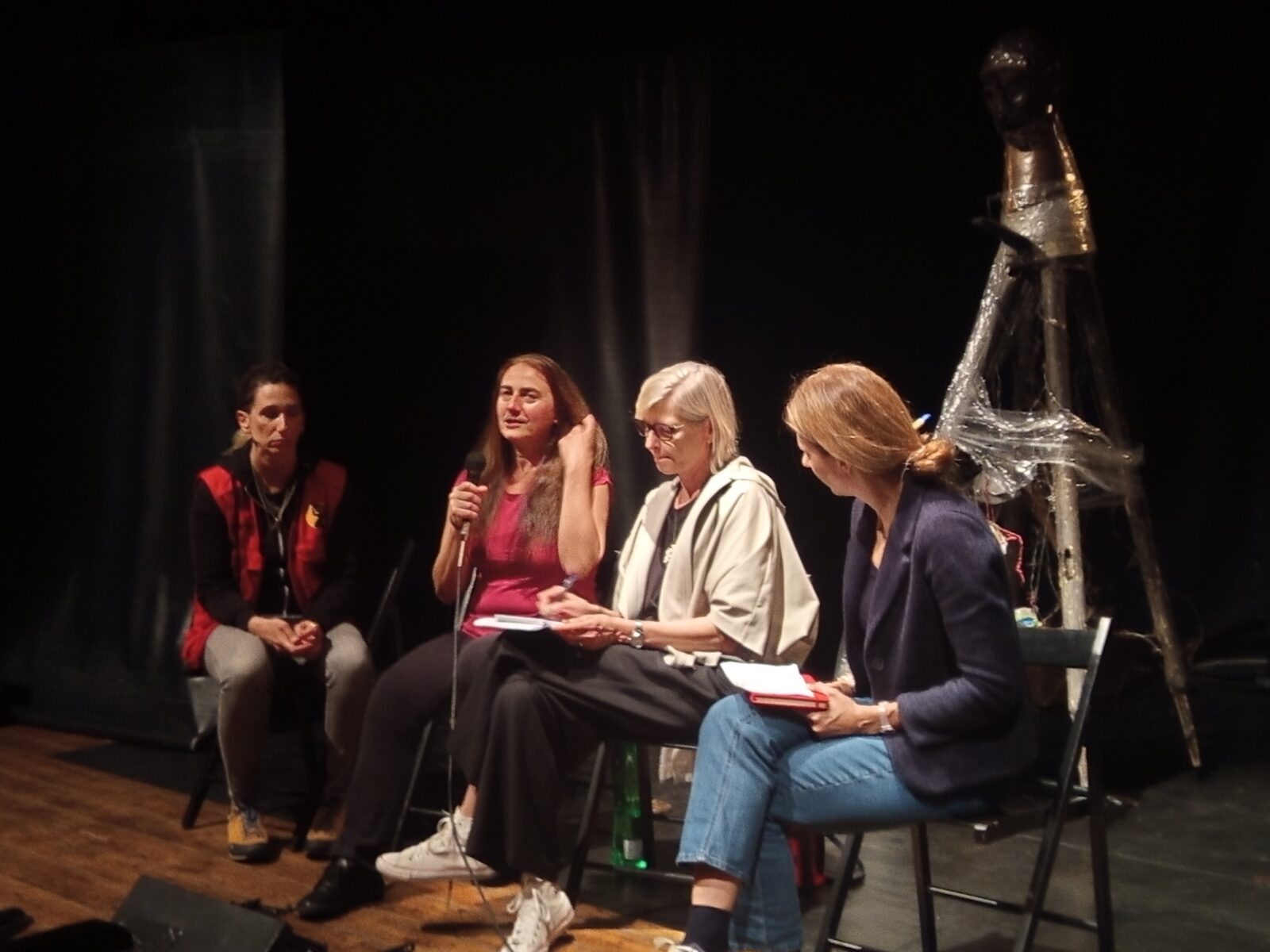
This time we brought the production CRIPPLETREK and performed it, symbolically, in the Lázár Hall (Ervin Lázár Hall). After the performance, Tímea Dénes, head of the Pálos Károly Social and Children’s Centre, and Melinda Bede, a psychology PhD student at ELTE University, joined the discussion. During the debate, focused on social issues, we were once again convinced that our concept works fully: stories and situations from the performance were repeatedly referenced by both experts and inspired a broader discussion about an area in desperate condition and long ignored by politicians. We spoke about problems that are becoming increasingly urgent not only in Hungary — ageing populations, the lack of support for dependent elderly people and their families, who are often pushed into poverty through caregiving, dying and death — topics that society still avoids discussing openly.
We would like to thank Milada Boráros for interpreting the discussion and for tirelessly supporting us, together with her family, during all our visits to Hungary.
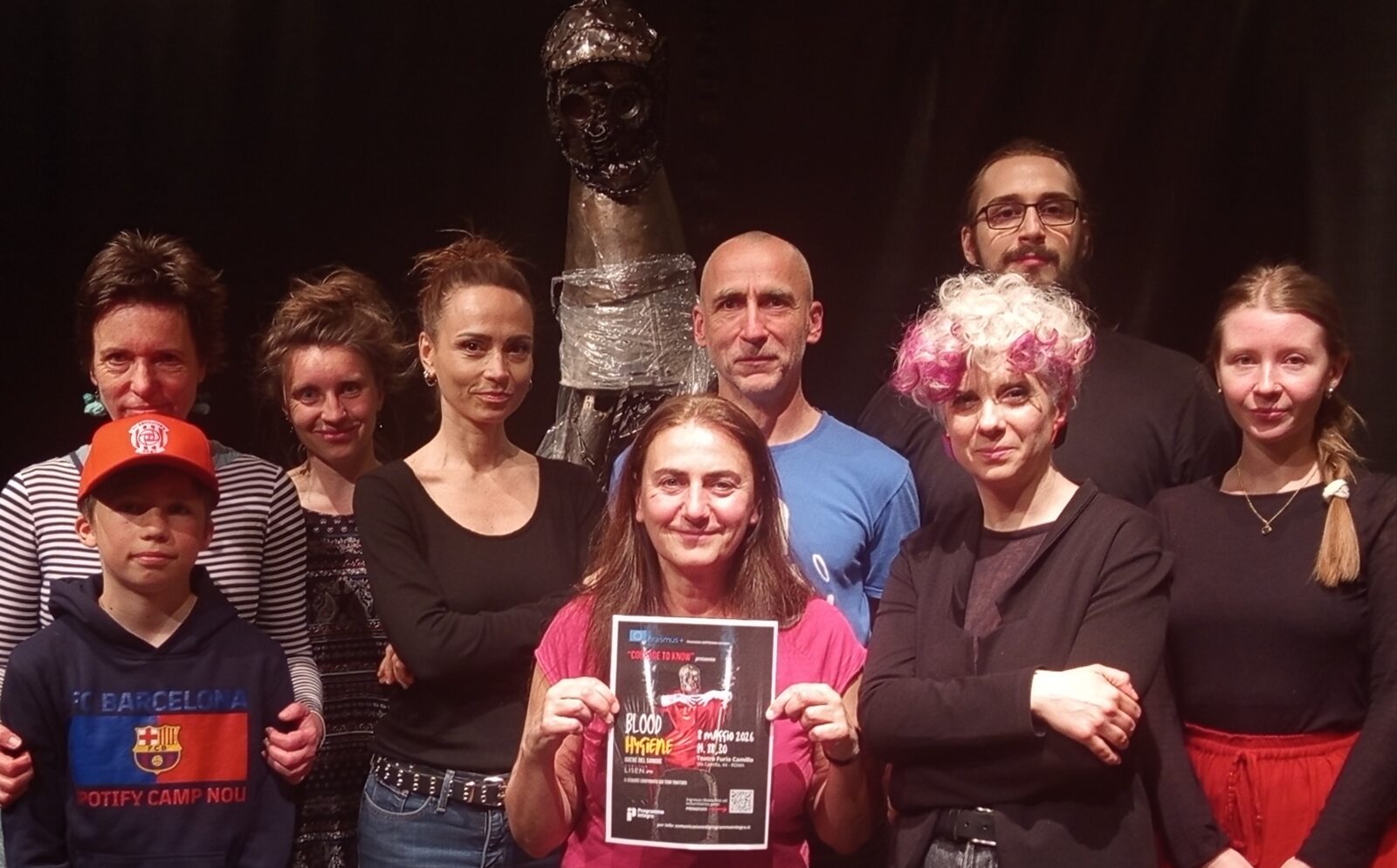
We then headed to Rome, filling the two-day drive with a road office and meetings about a new accounting programme. It was our first time performing in Rome. Cooperation with Programma Integra (represented above all by the excellent organisers Amalia Romano and Laura Biancon) resulted not only in successful presentations of our two productions. The Italian partners of the Courage to Know project also succeeded in connecting the themes of our performances with discussions involving remarkable people from both the human rights and theatre worlds.
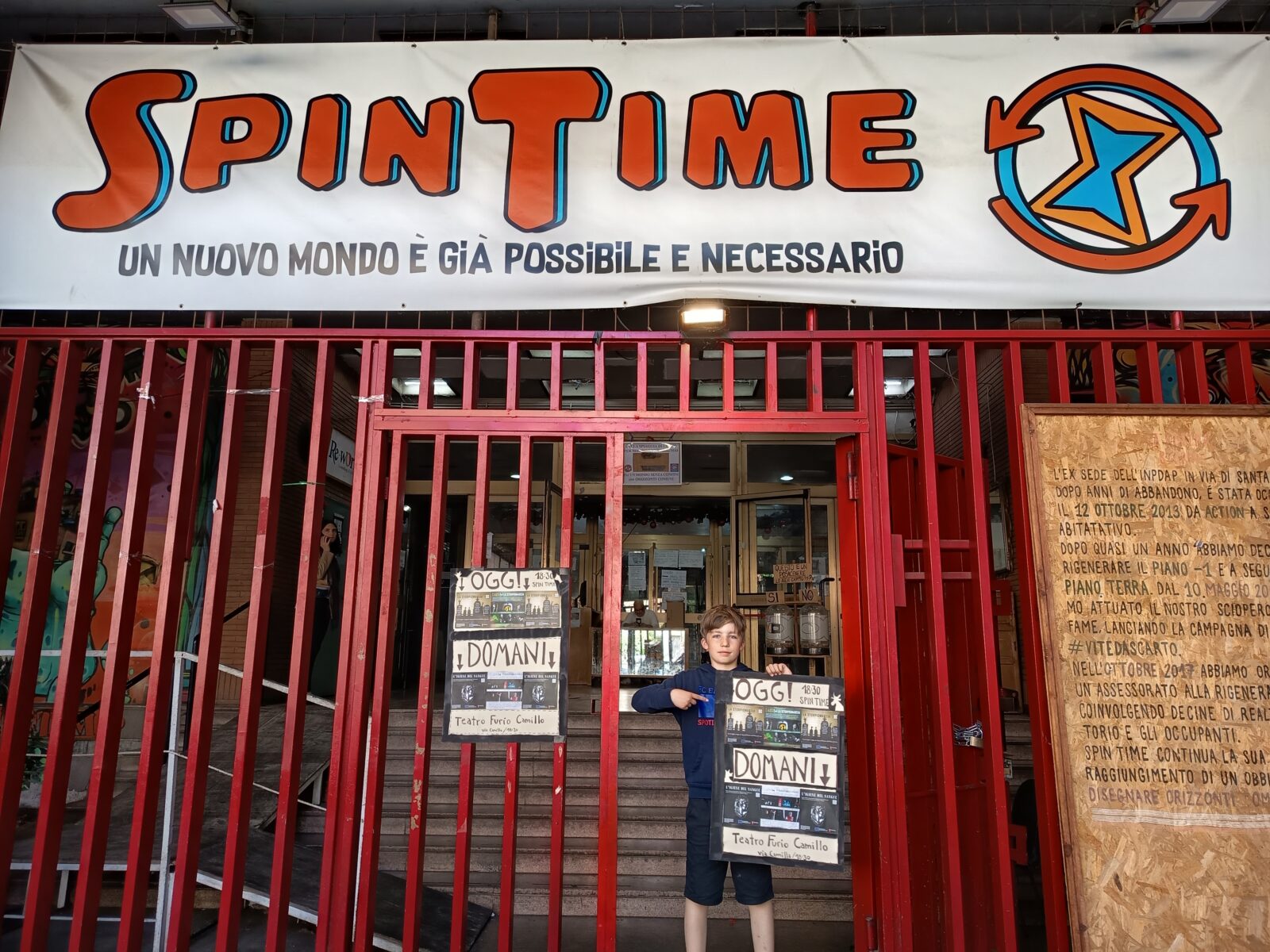
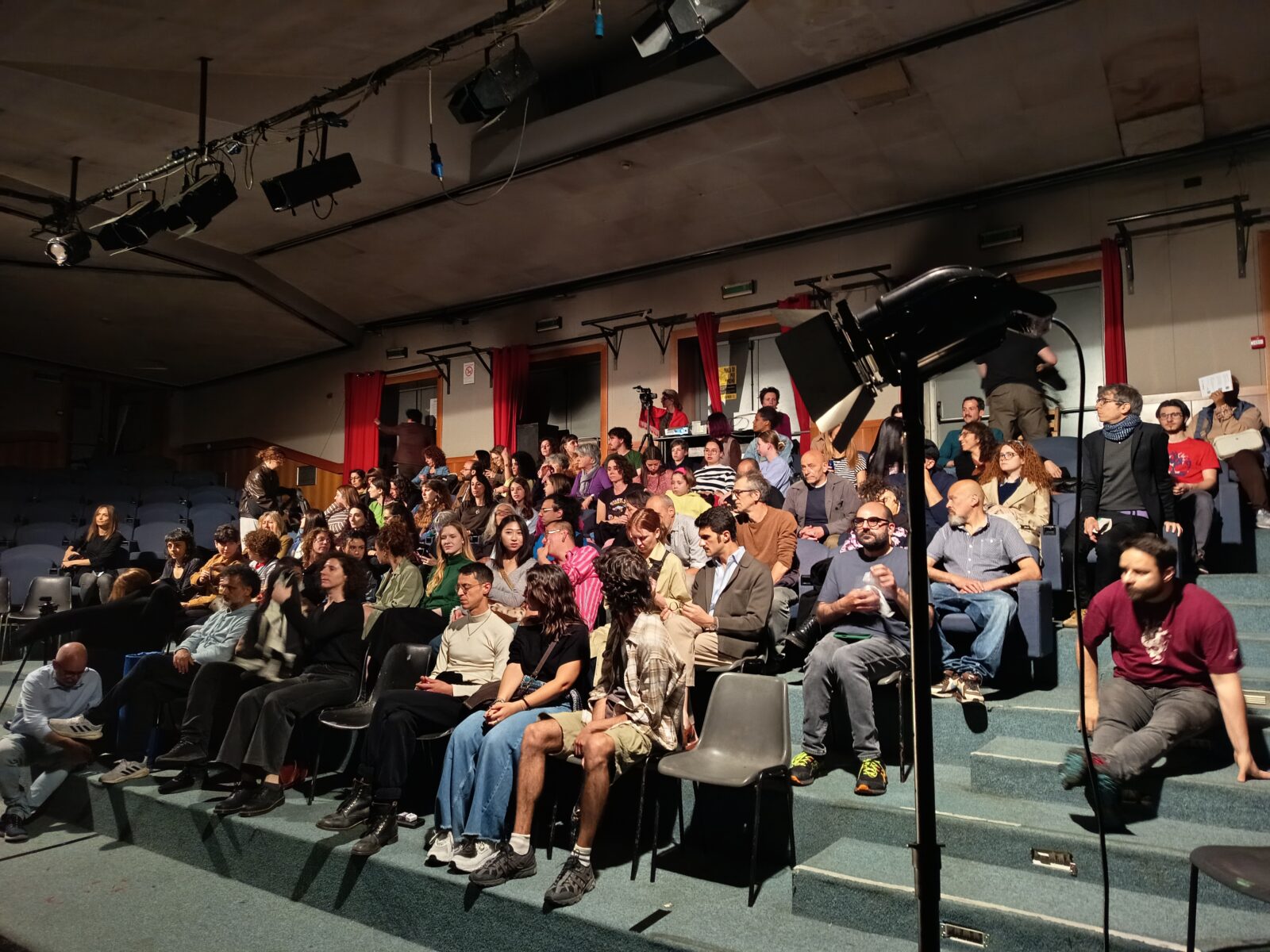
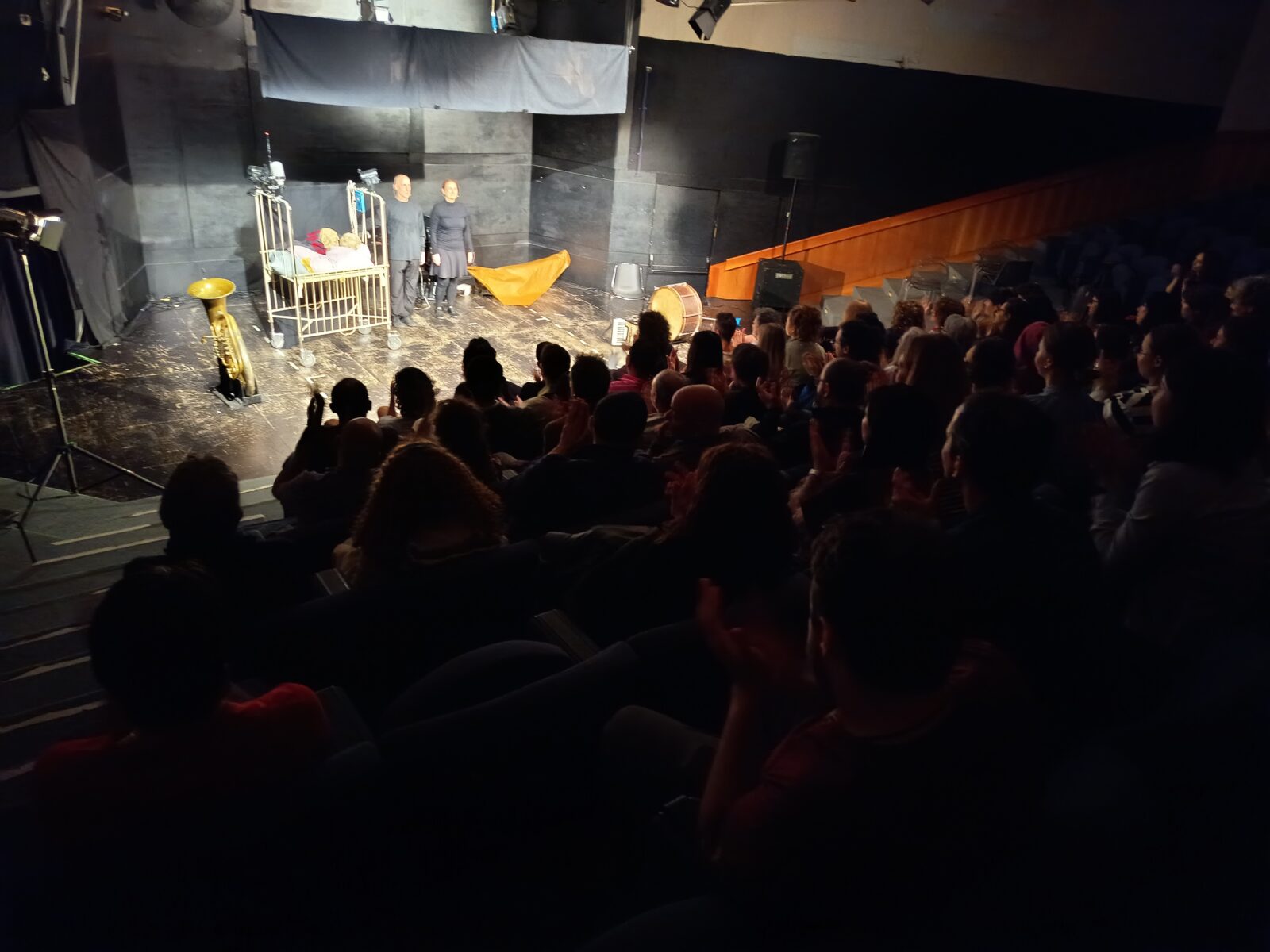
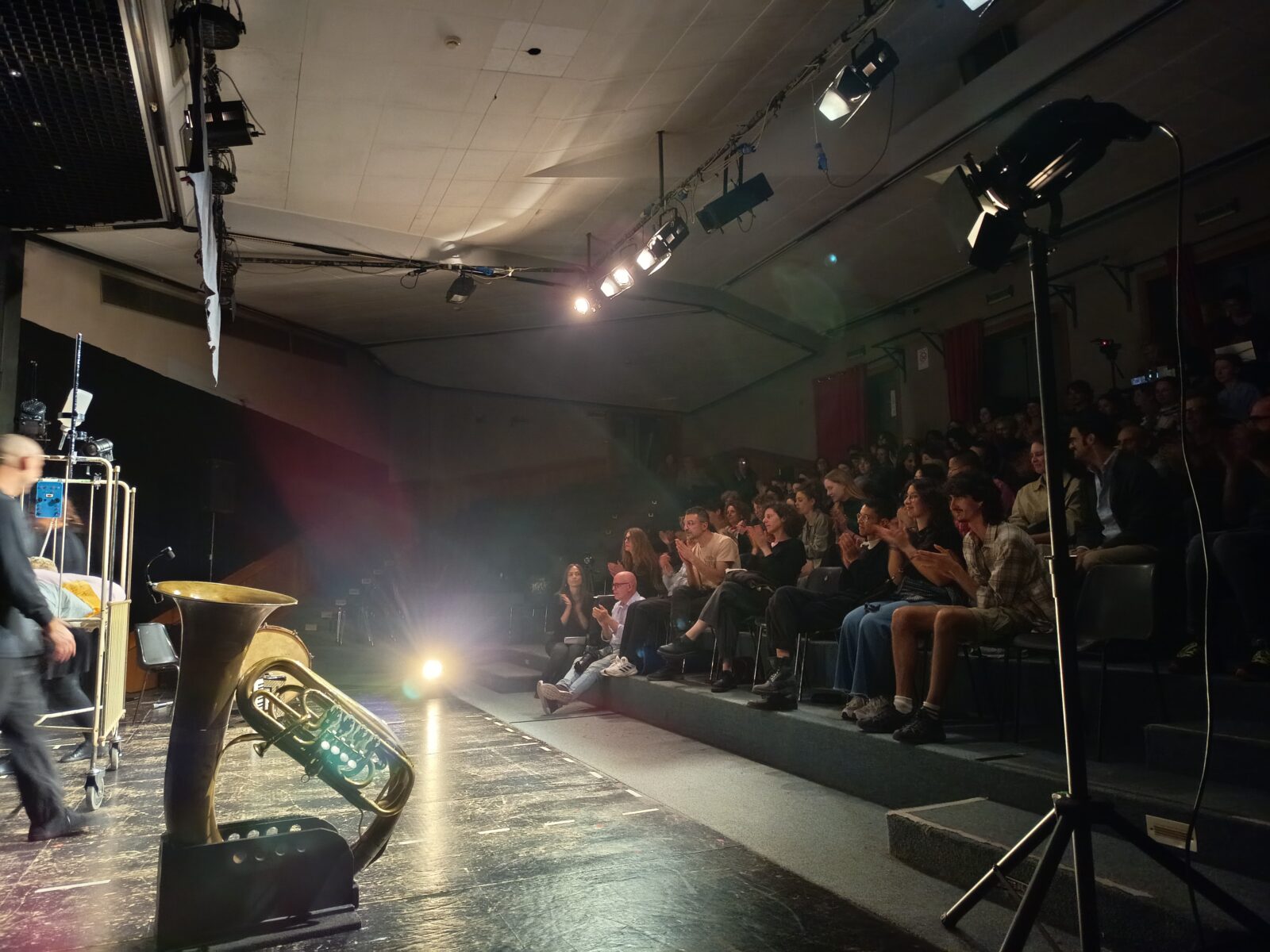
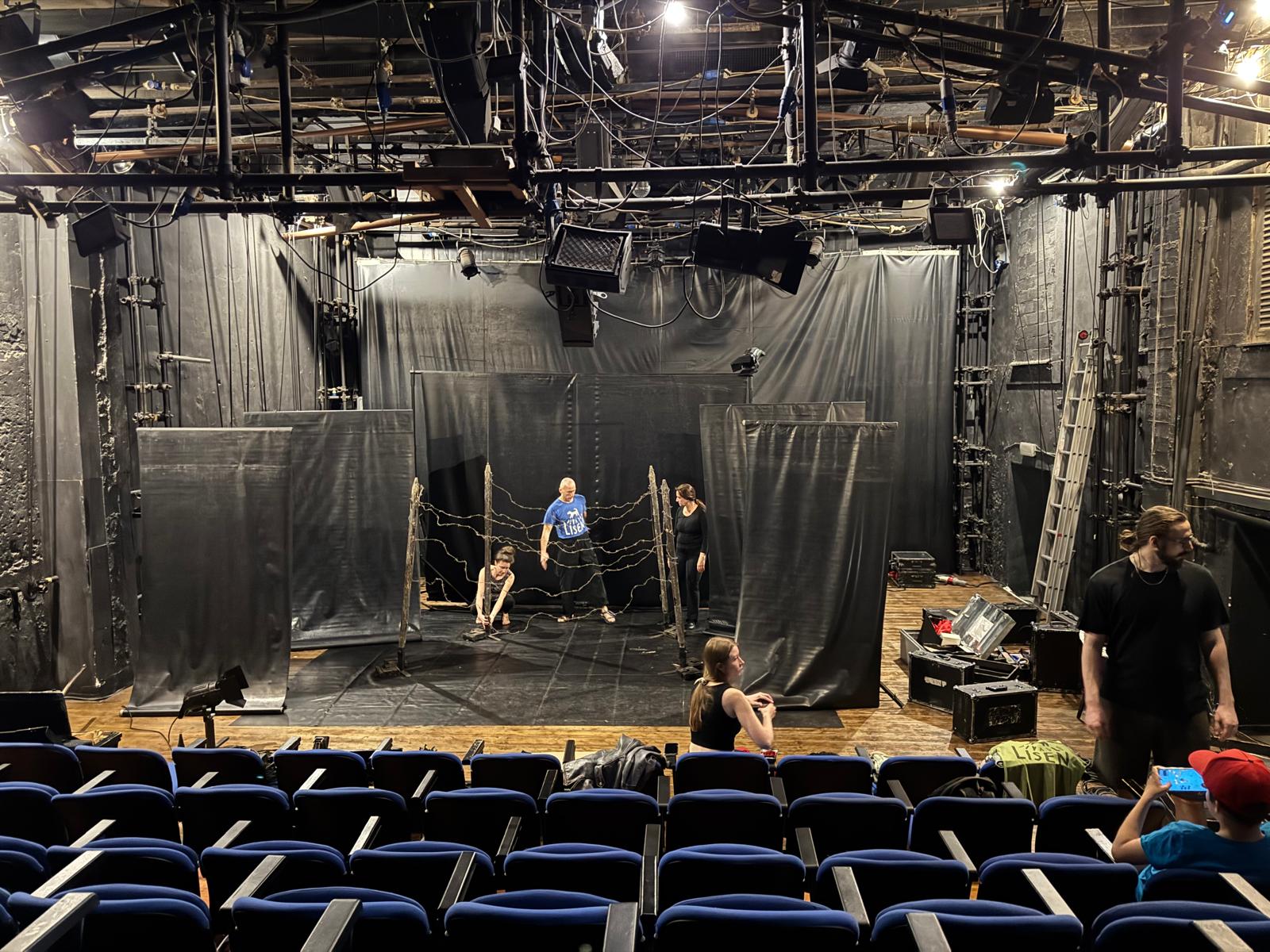
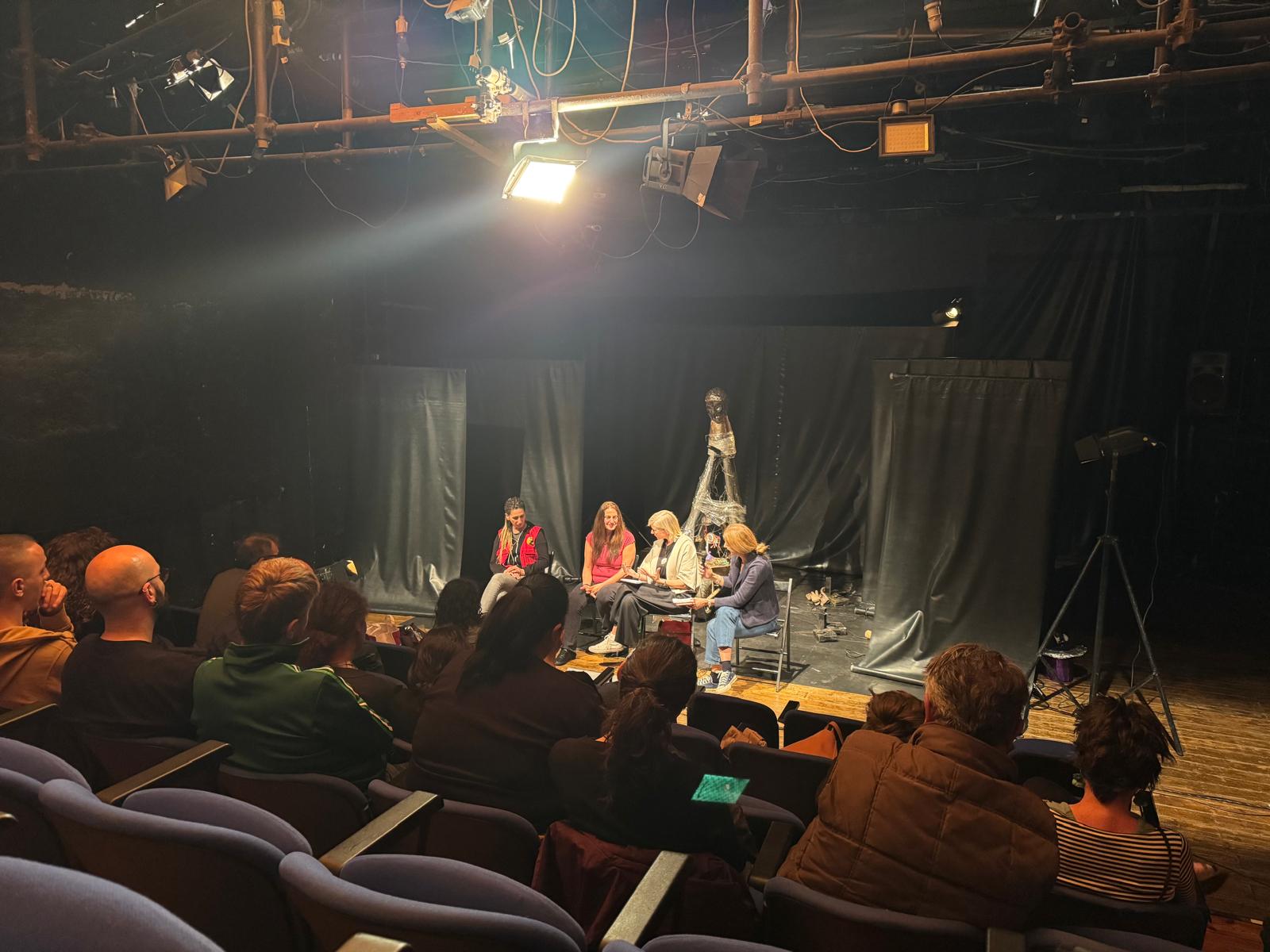
Both perspectives came together in the person of Cecilia Carponi, who joined the discussion after CRIPPLETREK. This lecturer at Sapienza University and researcher in theatre history is also an activist and volunteer working in the unique space Spin Time Labs. In this seven-storey former office building, now home to around four hundred people of different nationalities, cultural, social and educational activities as well as community events take place. In the theatre hall located in the basement of this enormous squat, we performed CRIPPLETREK and then spoke about supporting poor people, refugees and homeless people in the heart of Rome.
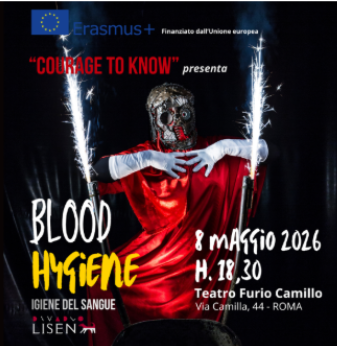
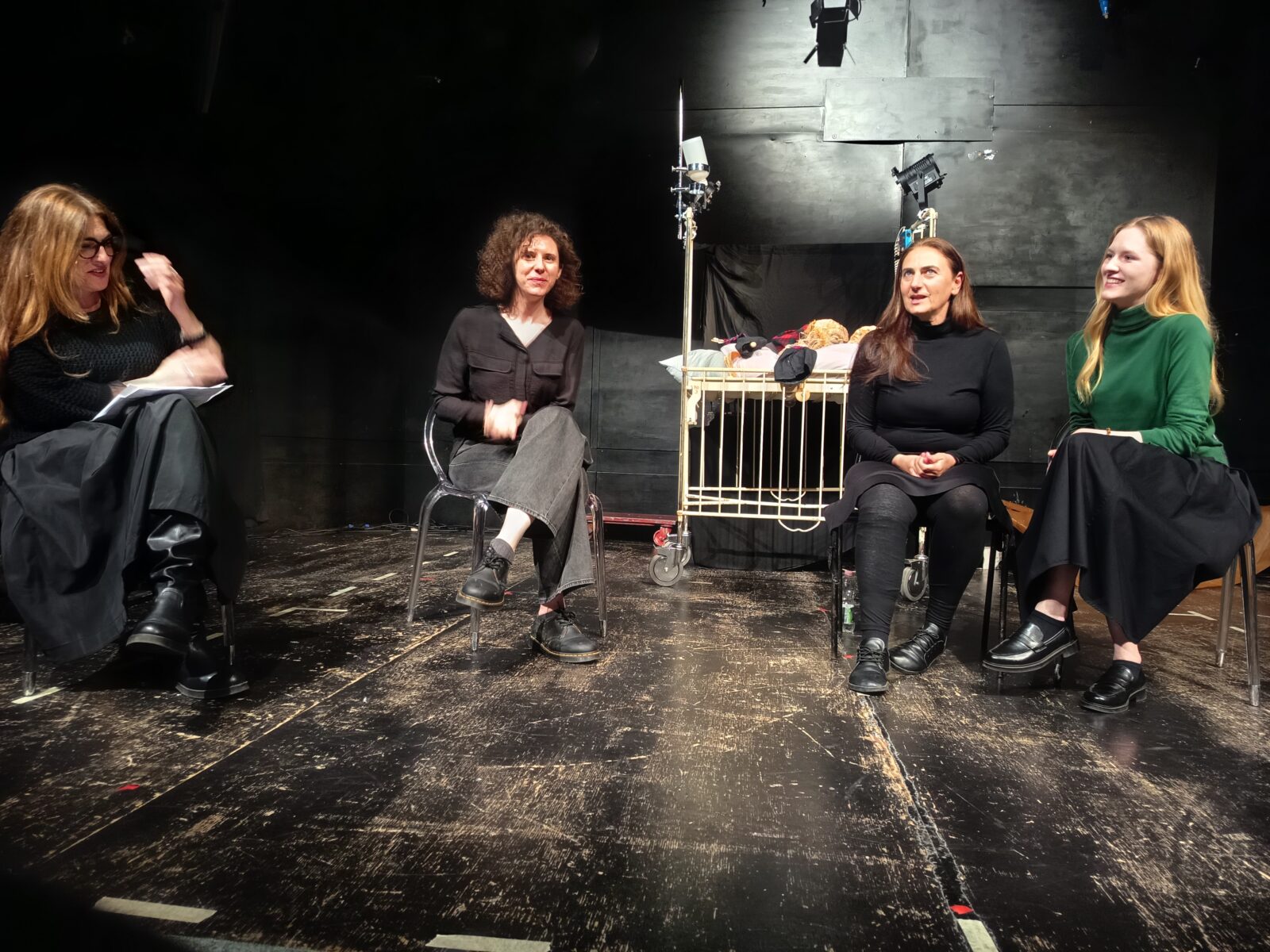
After BLOOD HYGIENE, presented the following day at Teatro Furio Camillo, the audience discussion featured Giovanna Cavallo, a lawyer from the Association for Legal Studies on Migration. The theme of dehumanisation explored in the production opened a debate on migration and refugees, issues that resonate in Italy far more strongly than in the Czech Republic. We also spoke about how public interest and the tireless efforts of activists can intervene in human destinies and make possible what would otherwise seem impossible — for example helping students from Gaza reach schools in Italy.
We are grateful that, thanks to the support of the EU and the Czech Ministry of Culture, we are able to overcome distances of thousands of kilometres. Our performances lose none of their urgency west of our borders. On the contrary, Italian audiences appreciated both the metaphorical language of the productions and the themes they opened so powerfully.
And then just one final toast before the journey home: Glory to Ukraine, Free Palestine!
Pavla Dombrovská, Kateřina Slámová Bartošová
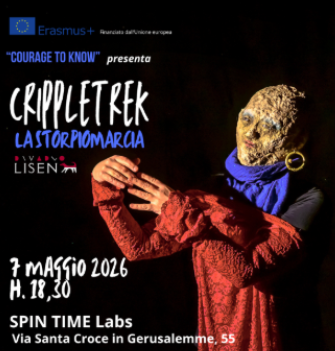
Last night at SPIN TIME LABS, in collaboration with Programma Integra, another performance capable of astonishing and drawing the audience deeply in took place: CRIPPLETREK – La Storpiomarcia by the Czech ensemble Teatro Líšeň.
An intense, visionary and provocative journey leading the audience through a world of rebellion, fragility and human resilience. Masks, puppets, shadow play, stage machines and live music merged into a production of extraordinary visual power — an immersive spectacle capable of captivating both the eye and the imagination.
A theatre that does not merely tell stories, but creates entire worlds. A theatre that disturbs, surprises and invites the audience to surrender to images and emotions.
Photographing such an evening was a wonderful challenge: capturing lights, shadows, movement and constantly shifting details, and trying, at least in part, to convey the magic unfolding on stage.
Spin Time once again confirms itself as a place open to international culture, experimentation and encounters between different artistic languages. A living space, made possible by the daily commitment of those who continue to shape it into a place for art, community and humanity.
Thanks to everyone who makes all this possible.
Two days of profound emotions: this is what the performances CRIPPLETREK and BLOOD HYGIENE — two productions by Divadlo Líšeň presented in Rome — have left within us.
The evenings of 7 and 8 May were marked by surprise, discovery and the shared experience of the magic of unconventional storytelling together with the many spectators who attended the events.
For many of us, the theatrical language introduced by Divadlo Líšeň became a kind of “spectators’ initiation” — a new way of understanding both old and new stories through a narrative form that employs a complex language while remaining utterly immediate in its imagery and associations.
We marvelled, understood, sometimes interpreted things in our own way, and in the end completely surrendered ourselves to the brilliant direction, the mastery of both performers, and the fascinating masks and strange scenic objects, whether radiant or sombre.