The Legacy of Anna Politkovskaya
What began as a discussion about Anna Politkovskaya’s work gradually became one of the most intense conversations in our series. We talked about her book, the value of her reporting, and the price she paid for striving to write the truth. Politkovskaya was a symbol of journalistic courage — and it was precisely her persecution and murder that opened up the discussion on how dangerous exposing the crimes of those in power can be in Russia.
The Rise of Putin and the Return to a Firm Hand
From this personal and professional story, we naturally moved to a broader context: Russia’s return from the chaos of the 1990s to Putin’s model of a strong hand. We discussed how Vladimir Putin was elevated to power as a “problem solver,” how he leveraged his background in the security services and the support of oligarchs, and how his rise was linked to a series of shocking events — from apartment bombings to the Dubrovka theater attack and the Beslan tragedy.
The Chechen Wars and the Formation of a Repressive Regime
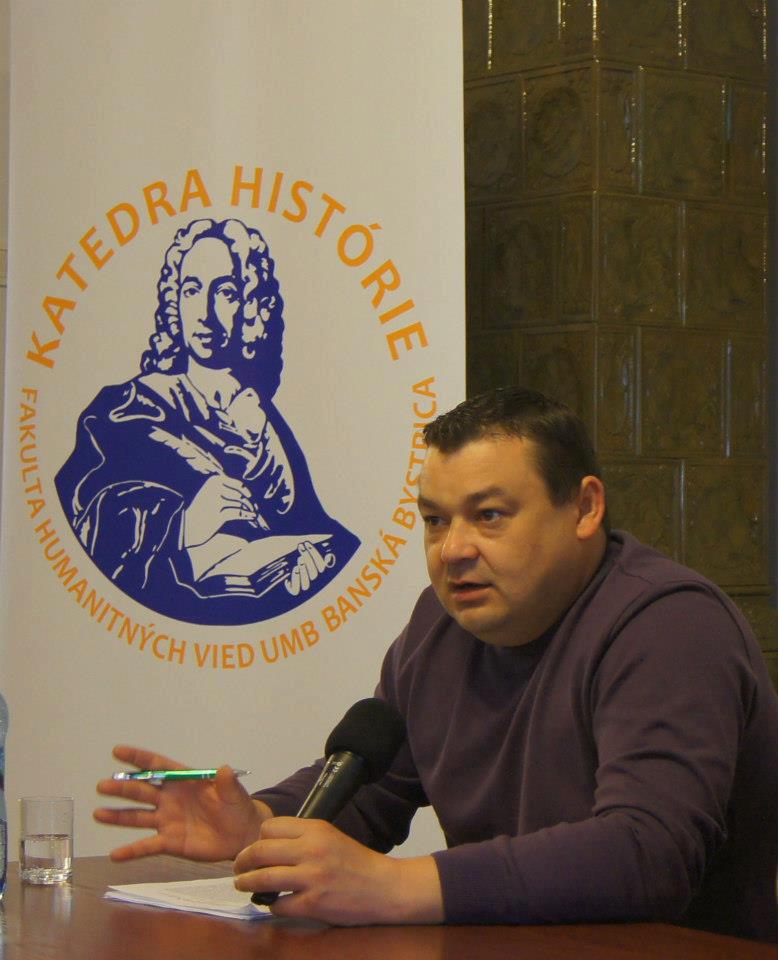
In this context, references were made to the Second Chechen War — the massive bombing of Grozny, thousands of casualties, and the subsequent subjugation of the region through the Kadyrov clan, which became a laboratory of impunity and brutality. Professor Smigel described how, under the guise of “counterterrorism,” a system evolved that gradually shifted from managed democracy to authoritarianism, culminating in what historian Timothy Snyder calls a “fascist-type dictatorship.”
Laws, Propaganda, and Hybrid Warfare
The discussion then turned to the tools of power the regime uses today: legislation targeting the opposition, labeling critics as “foreign agents” or “terrorists,” as well as propaganda and hybrid warfare. We talked about media manipulation, state-organized troll networks, and funding for groups in Europe that help spread pro-Russian narratives. The conflict in Ukraine was presented not as a dispute between two states, but as a clash between a totalitarian system and European democracy.
Ukraine in 2014 and 2022
The conversation moved to 2014 and the annexation of Crimea, which altered the geopolitical perception of Russia, and to the 2022 invasion, which shocked Europe with its scale. We discussed Russia’s official demands toward NATO, historical parallels, the Soviet imperial tradition, and Ukraine’s strategic importance. We also explained demographic and cultural nuances that often lead to misinterpretations about “Russian-speaking” regions.
Possible Consequences of Ukraine’s Fall
A particularly powerful part of the discussion focused on the potential consequences of a hypothetical Ukrainian collapse — from reprisals and mass emigration to threats to European security and capital flight from the region. Insights into the internal situation in Russia revealed a complex picture: mentions were made of protests, partisan activities, desertions, and the problematic interpretation of Russian public opinion polls.
The Importance of Independent Media
A key theme of the discussion was the role of independent media. Specific recommendations were made regarding whom to support, which publications to read, and why direct financial support for quality journalism is one of the most effective ways to counter propaganda. Professor Smigel also recommended Timothy Snyder’s book Twenty Lessons from the Twentieth Century.
Civic Engagement and the Role of Culture
The conclusion focused on civil society. We talked about student movements, the significance of cultural institutions, and why it matters to visit theaters, galleries, and libraries. There was a call not to be afraid to engage, to support independent culture, and to maintain a society resilient to manipulation.
Personal Anecdotes and Historical Context
The entire discussion was interwoven with the professor Smigel’s personal memories of the 1990s, the collapse of the Soviet Union, and family history, which added authenticity to his perspective. These were complemented by emotional and lighthearted asides, local references, and remarkable associations that helped create a vivid picture of the period we discussed.