
The Provoking Theatre in Visegrád
We continue Provoking Theatre Series in the V4 countries.
We perform our productions Putin is Skiing, Blood Hygiene, and the newest play CRIPPLETREK. In the discussions following the performances, we address urgent contemporary topics. Our project partners chose the discussants for the post-show debates. We look forward to their reflections on current events. We are curious to see if the themes we address will be viewed differently in each country. We consider it important for our project to contribute to the support of democracy at a time when tendencies toward populism and totalitarianism are on the rise in the V4 region.
The project is co-financed by the governments of the Czech Republic, Hungary, Poland, and Slovakia through Visegrad Grants from the International Visegrad Fund. The mission of the fund is to promote ideas for sustainable regional cooperation in Central Europe.
Project Partners
Project highlights
Events
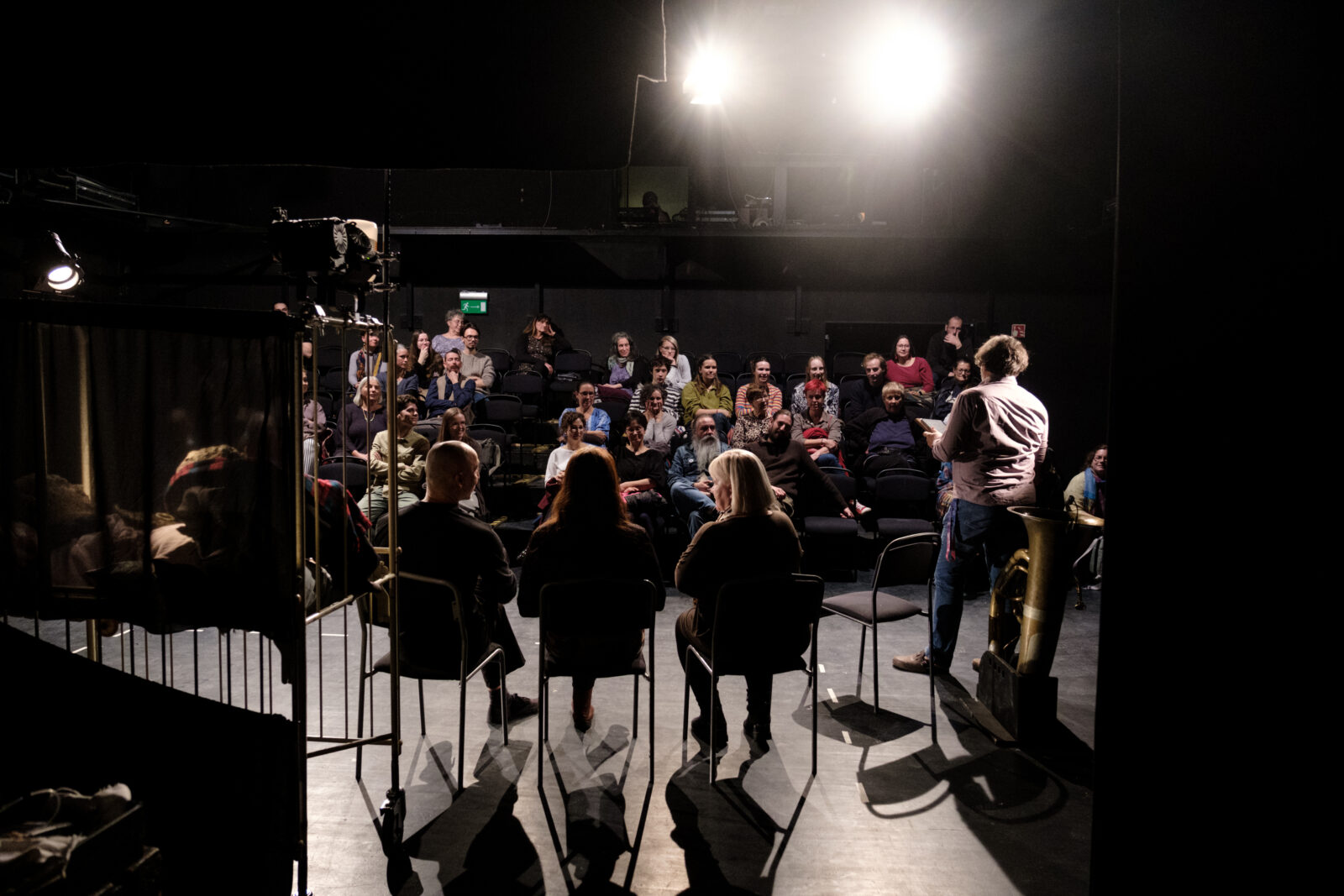
The discussions reflected not only the internal transformations of democratic systems, but also broader geopolitical contexts—the transformation of international relations, the influence of great powers, the war in Ukraine, and other contemporary conflicts that enter the public space and affect the everyday experience of society.
Pecz beseda Kriplstreka x
Topic Map from Discussions
- Democracy and Power Shifts
- Ideology, Values, and Their Instrumentalization
- Propaganda and the Media Environment
- Memory, History, and Geopolitical Narratives
- Polarization of Society
- Individual Responsibility
- Theater as a Tool for Social Reflection
- Theatrical Means and Strategies
- Ethics and Responsibility of Creation
- Audience and Reception
- Social Topics – Performance Crippletrek
– weakening of democratic institutions and control mechanisms
– concentration of political power
– pressure on independent culture and civic initiatives
– influence of international political developments on domestic politics
– politicization of so-called traditional values
– linking religious discourse with political power
– moral appeal as a tool for legitimizing political stances
– reaction to global conflicts through identity frameworks
– dissemination of disinformation and hybrid narratives
– influence of foreign actors (e.g., Russian propaganda)
– manipulation through emotions
– media images of war and conflict
– selective interpretation of the past
– history as a tool of contemporary politics
– reinterpretation of East-West relations
– influence of historical narratives on contemporary conflicts
– division of society into value-based blocks
– construction of the enemy
– radicalization of stances in connection with war and conflicts
– tension between silence and public stance
– individual reaction to war, violence, and injustice
– everyday compromises in a value-conflicted environment
– creating space for public discussion
– mediating experiences with conflicts and crises
– opening sensitive and political topics
– work with visual metaphor and imagery
– stylization as a tool for generalization
– use of puppets and objects
– connecting the production with moderated discussion
– processing themes of war, violence, and injustice
– responsibility for the interpretation of reality
– the boundary between message and manipulation
– different readings of productions in individual countries
– influence of geopolitical context on interpretation
– importance of subsequent debates
– marginalization and social exclusion
– physicality and identity
– stigma and its reproduction
– visibility versus invisibility
– norm as a social construct